

By Patrick Omoake
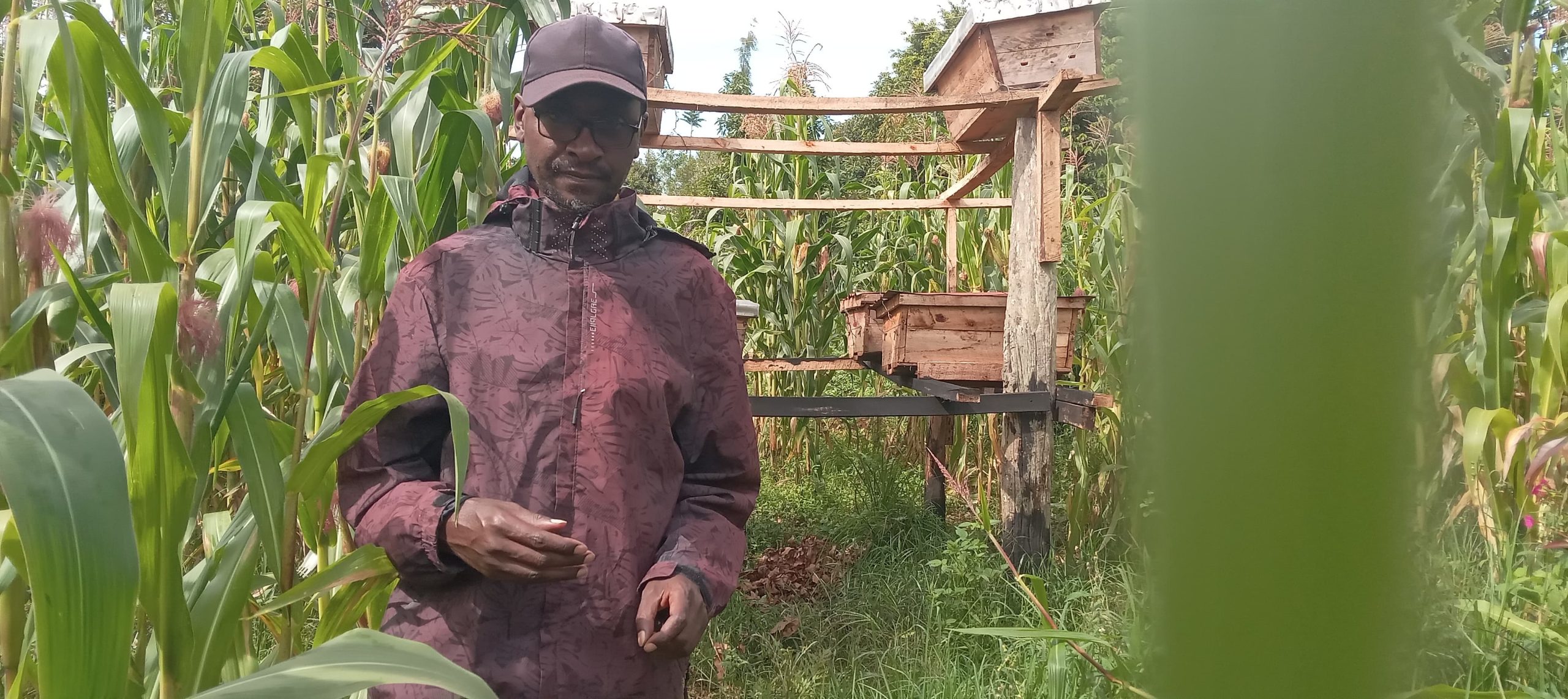
Clifford Gikunda has spent more than 15 years uncovering stories that connect science to society. A seasoned science journalist with global affiliations like the Biodiversity Media Alliance and the Earth Journalism Network, Gikunda has now found himself immersed in a new narrative, one written not with words but with bees.
What began as a moment of shock during a local event, witnessing people spray and kill a swarm of bees, became the spark for a new passion. “It was painful watching the bees drop one after the other to their deaths,” Gikunda recalls. “I spoke with my wife, and we decided to take action.” That action birthed what has now grown into a promising beekeeping initiative.
From Awareness to Action
With no formal training, Gikunda launched his beekeeping journey with two locally made hives crafted from invasive Eucalyptus trees. “We used the wood from the trees to make hives and planted Hass avocado trees in their place,” he says, turning environmental degradation into an opportunity for restoration.
Relying on informal mentorship, phone calls, and WhatsApp conversations with seasoned beekeepers, Gikunda took a bold leap into what he calls “trial and error.” Within days, the hives were colonised, and the initiative began to flourish. Today, he manages 10 hives and counting.
Pollinators at Work
While the beekeeping operation is still young, its effects on local agriculture are already visible. Gikunda notes an increase in the yield of crops like beans, potatoes, macadamia, and especially Hass avocados thanks to the tireless pollination efforts of his bees.
“Bees are the ultimate pollinators,” he explains. “The vigour of the crops has improved remarkably.” The benefits, though indirect at this stage, have rippled out to nearby farms, quietly strengthening local food security.
Battling Misconceptions and Managing Challenges
Not everyone has been supportive. “A neighbour living 500 meters away complained about the bees,” Gikunda says. “Misconceptions about bees are hard to correct.” He hopes to organise training sessions in the future to educate both adults and schoolchildren about the ecological value of bees.
There have also been practical setbacks. “I moved two hives once, and the next day, swarms of bees descended on our home,” he recalls. The incident resulted in stings to livestock and a call to a vet for emergency treatment. Ants, too, have been a menace, once destroying over 30 kilograms of honey and displacing two colonies. His solution? Engine oil-soaked cloths tied around hive supports—a rustic but effective barrier.
Vision Beyond the Hive
Though still operating independently, Gikunda is open to collaboration. “I’m willing to work with any organisation that supports beekeeping,” he says. His long-term vision is to scale the project across his family’s land and create a dependable source of natural bee products for the market.
More than just a business, the initiative is a call to environmental consciousness. “We must understand that the world does not belong to us alone,” Gikunda emphasises. “If bees went extinct, humans would starve within 20 years.”
A Wake-Up Call for Africa
Gikunda’s story is not just about bees; it’s a reminder of our role in preserving the ecosystems we depend on. As climate change and biodiversity loss threaten food systems across Africa, small-scale sustainable solutions like beekeeping are critical.
“As Africans, we must wake up to the reality that our ecosystems are under threat,” he says. “Protecting pollinators is protecting our future.”
With every buzzing hive and blooming avocado tree, Clifford Gikunda is proving that individual action, rooted in purpose and passion, can inspire environmental change and economic resilience.
Because truly—Bees Is Life.
Great work Gikunda