

By Collins Odigie Ojiehanor
Nairobi, Kenya—With a renewed focus on cleaner air and healthier communities, the Mombasa County Government is advancing policies that integrate waste reform, sustainable transport, household energy transition, and air quality monitoring.
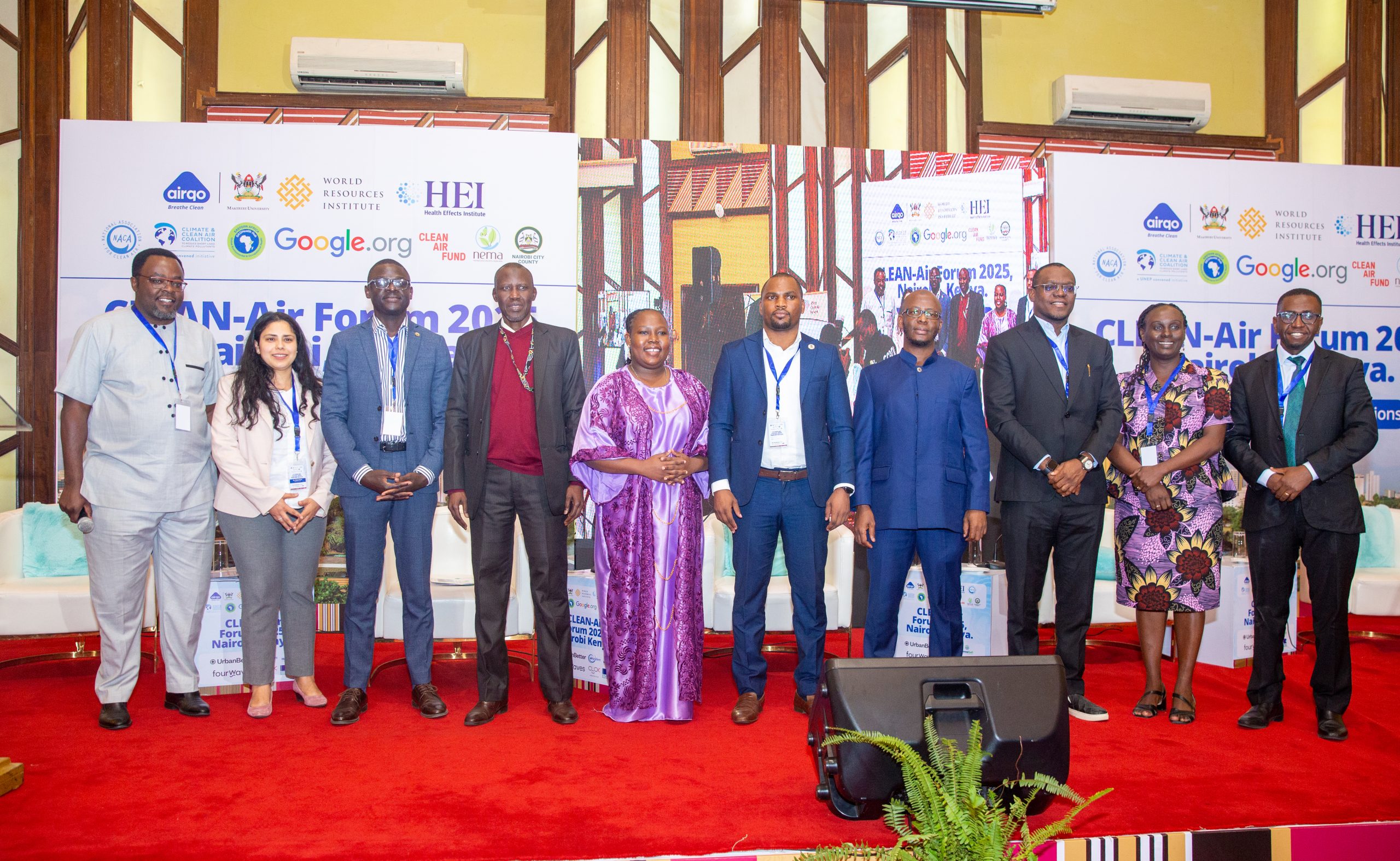
Speaking at the CLEAN-Air Forum 2025 in Nairobi, Emmily Achieng Okello, the County Minister for Climate Change, Energy and Natural Resources, outlined a series of initiatives designed to safeguard the health of residents in Kenya’s coastal port city.
Mombasa County, located in southeastern Kenya, is home to the nation’s second-largest city after the capital, Nairobi. It hosts Kilindini Harbour, Kenya’s major seaport and a vital trade gateway for the country and its landlocked neighbours.
Beyond its strategic economic role, Mombasa boasts a rich cultural heritage, including Fort Jesus, a UNESCO World Heritage Site built on Mombasa Island by order of King Philip I of Portugal.
The county’s pristine Indian Ocean beaches, marine parks, and historical landmarks make tourism one of its leading industries, complemented by thriving fishing and commercial sectors that sustain much of the local economy.
However, rapid urbanisation, rising population density, and industrial expansion have placed mounting pressure on the county’s infrastructure and environment.
Solid waste management, traffic emissions, and household air pollution pose growing challenges, threatening both public health and the county’s natural assets.
For a city where tourism and trade are lifelines, safeguarding air quality is as much about protecting lives as it is about preserving economic vitality.
“I’m grateful to the organisers for thinking about the very existence of humanity, and that is clean air,” Achieng said, as she traced her journey from civil society activism to government.
“Before I joined government, I was a member of the civil society, a very active one, and we used to protest about illegal dump sites. And we took the government to court. Fast forward, I joined the government. Now I’m staring at the lawsuit that I was part of in forming it,” she shared.
Building on the Mombasa Climate Action Plan
Achieng emphasised that Mombasa’s efforts are guided by its Climate Change Action Plan (2023–2050), which provides a roadmap towards the sustainability agenda and aligns the different sectors to what they’re supposed to do.
She noted that solid waste management has been a top priority: “From that action plan, of course, you’d assume we started immediately on the solid waste management to sort out the dump site issue. But as we all know from the different cities, it’s not a walk in the park. You try one design; it’s not working because you have different interests. But you need to manage,” she explained.
Achieng reported progress on a joint venture aimed at managing solid, liquid, and hazardous waste.
“On the silver lining, I would like to report that the city is getting into a joint venture with a partner that would sort solid, liquid, and hazardous waste. And God willing, in the next forum, we would be midway in implementation. We can report on the progress we’ve made so far,” she said.
Transport and Household Energy Transitions
Recognising that transport remains a major source of urban air pollution, Achieng highlighted the county’s efforts to expand non-motorised transport and promote the conversion of three-wheelers to electric vehicles.
“Through partnership, we are working on non-motorised transport and converting the three-wheelers to electric vehicles. Although we have some myths that we need to manage, you know, as Africans, we always have our say. But we are hoping we’ll go through that,” she noted.
She also spotlighted efforts to tackle household air pollution through the county’s Clean Air programme, which provides solar kits to households and small businesses.
“We have mapped 6,000 households… using the koroboi, the lamps that produce smoke. We are giving them a solar kit, and this is not only to help them at home but also for the small-scale businesses, the fish vendors, and the mamambogas who want to sell beyond six,” she said.
“This is a program that we want to do within His Excellency’s first term, which ends in 2027 in August. So this year we will scale up from the 1,000 that have already benefited, and hopefully we will finish the 6,000 mapped by 2027.”

Urban Development and Green Spaces
Achieng acknowledged the pressures of rapid urbanisation in Mombasa, a historic UNESCO-listed city now marked by modern high-rises.
“With time, of course, with population, it is slowly turning into skyscrapers. I think we want to follow the Nairobi suit. But that has also necessitated the county, with partners like the Green Building Society, to start reviewing the building codes, looking at the spatial plan and reviews,” she explained.
She added that plans are underway to incorporate recreational facilities, play areas, and urban forestry into neighbourhood designs, alongside the rehabilitation of existing parks.
Strengthening Regulation and Data Capacity
Achieng noted that Mombasa has completed public participation for its air quality regulation, with expectation for Cabinet approval.
“We hope to pass that so that we can start implementing. And again, with the support of the Stockholm Institute, we have a lot of sensors that we have piloted. One is at the Coast General Hospital, which is a referral hospital for the region,” Achieng said.
However, she acknowledged that the city’s six sensors are inadequate for evidence-based decision-making.
“For a whole city, six sensors would not be data that you can really use for evidence and decision-making. So we intend to do it in phases to get more sensors… I’m hoping we’ll consider Mombasa and capacity building.”
She called for ongoing investment in technical capacity and sector-specific data, particularly for medical waste and transport.
“We need to keep building the capacity of the technical team… to widen the scope and do sector-specific assessments so that when you’re talking about transport, you have data that informs; when you are in health, you have data that informs,” she said.
A Collaborative Path Forward
Achieng stressed that Mombasa’s clean air agenda can only succeed through strong partnerships with civil society, communities, and technical experts.
“This is the foundation we have laid as a county; we want to build on it to have sensors… to have the infrastructure that can manage the data we are collecting with the sensors and bring on board civil society communities in terms of advocacy so that everyone understands it is their role and they have something to do,” she concluded.
Mombasa’s renewed push for clean air aligns with sobering national trends. Over 26,000 Kenyans die each year from household air pollution, according to recent data from the NIHR CLEAN-Air (Africa) research group.
The tragedy is compounded by rising respiratory diseases, with COPD responsible for 1.7% of national mortality, a burden highest in informal and rural areas where biomass fuel use remains prevalent.
At the regional level, air pollution ranks as the second leading cause of death in East Africa, contributing to an estimated 294,000 deaths in 2021, as highlighted in a new report by the Health Effects Institute.