


By Collins Odigie Ojiehanor
The air we breathe in Africa’s burgeoning cities is becoming increasingly hazardous, with air pollution emerging as the second leading risk factor for death globally. In Nigeria, this issue is a pressing concern in Lagos, Nigeria’s busy economic hub and Africa’s largest city, where over 16 million residents face daily exposure to dangerous levels of air pollutants.
Recent studies and expert insights reveal the dire consequences of poor air quality on public health, emphasizing the urgent need for comprehensive air quality management strategies. This disturbing data led to a call for action echoed at the Lagos CLEAN-Air Forum 2024 on Tuesday, at the Sheraton Hotel in Ikeja, Lagos, where experts from across the continent convened to address the critical issue of air pollution and its impact on health and sustainability.
The Lagos CLEAN-Air Forum 2024, organized by AirQo (CLEAN-Air Network) and Makerere University, Uganda, was hosted in partnership with the Lagos State Environmental Protection Agency (LASEPA), the Air Quality Monitoring Research Group (AQMRG), the Evidence Use in Environmental Policymaking in Nigeria (EUEPiN), the University of Lagos, UrbanBetter, and other organizations, with the quest for cleaner air.
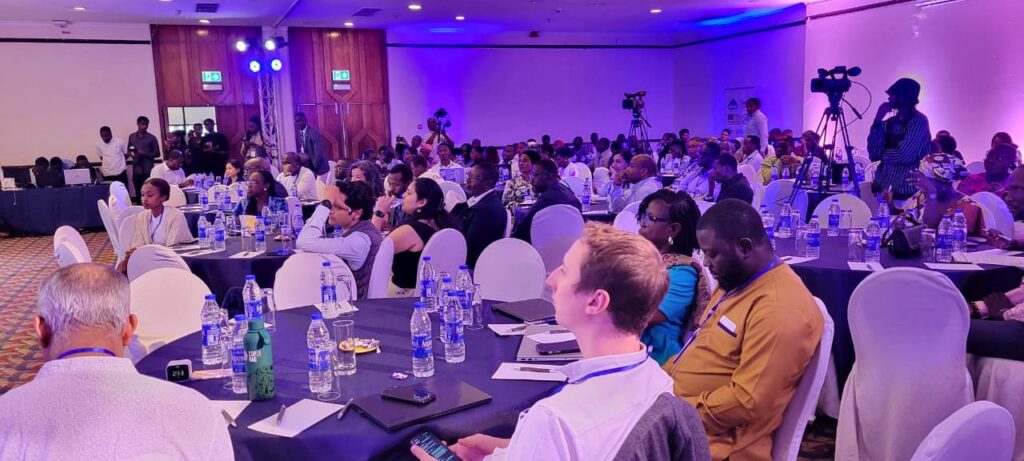 A cross section of participants in the CLEAN Air Forum during plenary. PC: AirQo
The Health Toll of Air Pollution
Air pollution has emerged as the second largest risk factor for death globally, with Africa and South Asia bearing the brunt of its devastating impact. In Nigeria, and particularly in Lagos, the air pollution crisis is stark and multifaceted, underscoring the urgent need for comprehensive and inclusive air quality management strategies.
Air pollution caused by traffic and congestion, biomass fuel burning and shipping is a major threat to sustainable growth.The annual average PM2.5 concentration in Nigeria in 2019 was 14.1 times greater than the recommended concentration levels by WHO in 2021.
In 2019, around 23,900 premature deaths were attributable to air pollution in Lagos. At the country level, premature deaths from air pollution (198,000) exceeded those from malaria (191,000) and was more than double those caused by HIV/AIDS (82,000) according to Clean Air Fund findings.
Professor L.O. Chukwu, Deputy Vice Chancellor, University of Lagos, in his opening remarks, urged policymakers, stakeholders, civil society groups, communities, and individuals from various regions to share best practices, innovative solutions, and research findings, with an aim to foster meaningful collaborations and strategies for improving air quality in African cities.
“We are committed to supporting research, education, and community engagement that promotes environmental sustainability and public health,” Professor Chukwu stated. “We believe that clean air is a fundamental right, and we must work together to ensure that future generations inherit a healthier and more sustainable environment.”
He continued, “Let us engage in fruitful discussions, share our experiences, and learn from each other’s successes and challenges. Together, let us drive meaningful change and make a positive impact on our cities and our continent.”
Impact on Children
Dr. Rebecca Nantanda, a paediatrician at the Makerere University Lung Institute in Uganda, delivering a compelling presentation on the health nexus of air pollution, underscored the urgent need for action in the region. “The most distressing news is that countries in South Asia and Africa are the most affected in terms of health,” Dr. Nantanda stated. “Populations in low- and middle-income countries are up to four times more affected by the effects of poor air quality.”
Dr. Nantanda emphasized that global statistics often mask the severity of the issue. “At the global level, it may seem that things are not that bad until you bring it home. In African cities and homes, the risk of health effects from poor air quality is up to four times higher. From conception to the end of life, everyone is affected by the quality of the air they breathe.”
She elaborated on the profound impact of air pollution on unborn children. “When a mother is pregnant and exposed to poor air quality, those impurities can pass through the placenta to the baby, affecting organ development. By the time these babies are born, they are already impacted by the effects of poor air quality. This is why air pollution is now the second largest risk factor for neonatal death.”

Dr. Rebecca Nantanda, a paediatrician at the Makerere University Lung Institute.PC: AirQo
Dr. Nantanda presented alarming statistics, noting that over 700,000 children die annually due to poor air quality. “In Africa and South Asia, the burden is heaviest. Children under five are particularly vulnerable, with air pollution now being the highest risk factor for death in this age group. Historically, malnutrition was the leading underlying risk factor, followed by diseases like malaria and HIV.
However, air quality has now surpassed many of these as a leading cause of death.” She highlighted that significant progress has been made in combating diseases like malaria, HIV, and tuberculosis. Yet, air pollution remains a critical, yet often overlooked, public health crisis. “We’ve taken substantial steps to address malaria, HIV, and TB, but air quality is now the second leading risk factor for death, especially among children who are the future of our societies.”
Dr. Nantanda also pointed out the widespread impact of air pollution on adults. “Poor air quality contributes to a high number of deaths from respiratory infections such as pneumonia, viral infections, and TB. It’s estimated that 56% of these deaths are attributable to poor air quality.”
She further made a call to action, stressing the immediate need for cleaner air to safeguard health. “We need to bring this issue home and recognize that urgent measures are required. We must act now to clean the air for our children and ourselves. The risk factor is too significant to ignore, and it’s time we prioritize air quality just as we have other major health issues.”
Dr. Nantanda’s insights highlight the urgent need for comprehensive strategies to tackle air pollution in Africa and South Asia. Her message is clear: improving air quality is critical for saving lives and ensuring a healthier future for generations to come.
The Complex Air Pollution Landscape in Lagos
Lagos, Nigeria’s bustling economic hub and Africa’s largest city, is home to over 20 million residents who face daily exposure to dangerously high levels of air pollutants. The city’s rapid urbanization and population growth have brought with them a host of environmental challenges.
Vehicular emissions are a major contributor, with traffic congestion leading to a constant release of pollutants such as carbon monoxide (CO), nitrogen oxides (NOx), and particulate matter (PM2.5). These pollutants are known to cause respiratory and cardiovascular diseases, contributing to high morbidity and mortality rates.
Industrial activities also significantly contribute to Lagos’ air pollution. The city’s numerous factories and power plants emit large quantities of pollutants into the air. Coupled with the widespread use of diesel generators due to the unreliable power supply, these emissions create a toxic cocktail that residents inhale daily. Furthermore, the burning of waste, both in open dumps and by residents, releases harmful chemicals into the air, exacerbating the pollution problem.

Experts and participants having a dialogue. PC: AirQo
PM2.5 Levels and Health Consequences
Lagos’s annual average PM2.5 concentration is substantially higher than the World Health Organization’s recommended levels, leading to severe health consequences. In 2018, air pollution was responsible for 11,200 premature deaths in Lagos, the highest in West Africa, with children under the age of five being the most affected according to Clean Air Fund report.
In a statement, Engineer Bainomugisha, the AirQo project lead, emphasized the significance of leveraging advanced digital technologies and tools to measure, model, and inspire actions toward cleaner air. “It is a critical moment for African cities to come together to make significant progress towards air quality management. I believe it is essential for all partners to unite and amplify our efforts to achieve cleaner air across the African continent. When Africa and its partners come together, we can make progress on our CLEAN AIR actions,” he stated.
Engineer Bainomugisha elaborated on the forum’s goals, emphasizing the need to map the policy landscape across Africa and identify data requirements to support evidence-based policy development for air quality management. “We are in Lagos to make progress on CLEAN AIR actions,” he said.
The forum’s priorities include taking stock of participatory air quality initiatives across African cities, defining the data ecosystem and best practices for utilizing low-cost air quality sensor networks, and fostering knowledge-sharing and stakeholder collaborations to enhance the science-policy interface and public awareness of air quality.
With 256 registered stakeholders, policy makers, scientists, civil society organizations and many others from 34 countries, Engineer Bainomugisha noted that the Lagos CLEAN Air Forum 2024 represents a significant synergy for air quality initiatives in Africa.

Engineer Bainomugisha, the AirQo project lead.PC: AirQo
Leveraging Technologies on Air Quality Management
Discussions in the forum highlighted the importance of leveraging technology to address air pollution. Speakers underscored the potential of technologies such as sensor networks, data analytics, and artificial intelligence to monitor and manage air quality in real time.
Community-led initiatives were also a focal point, showcasing the critical role of local communities in raising awareness about air pollution and participating in solution-finding efforts. UrbanBetter led a presentation demonstrating a community-led initiative that used physical exercise activities to establish a network of air quality monitoring stations in neighborhoods, providing citizens with real-time data on air quality.
The forum’s scientific programming concluded with a stocktake of participatory initiatives from various cities. The session featured presentations from Kisumu City, Accra, Yaoundé, and a case study from Mexico City, highlighting the progress made since the Kampala forum in 2023. These presentations emphasized the importance of capacity development and community involvement in policy development and implementation.