

By Collins Odigie Ojiehanor
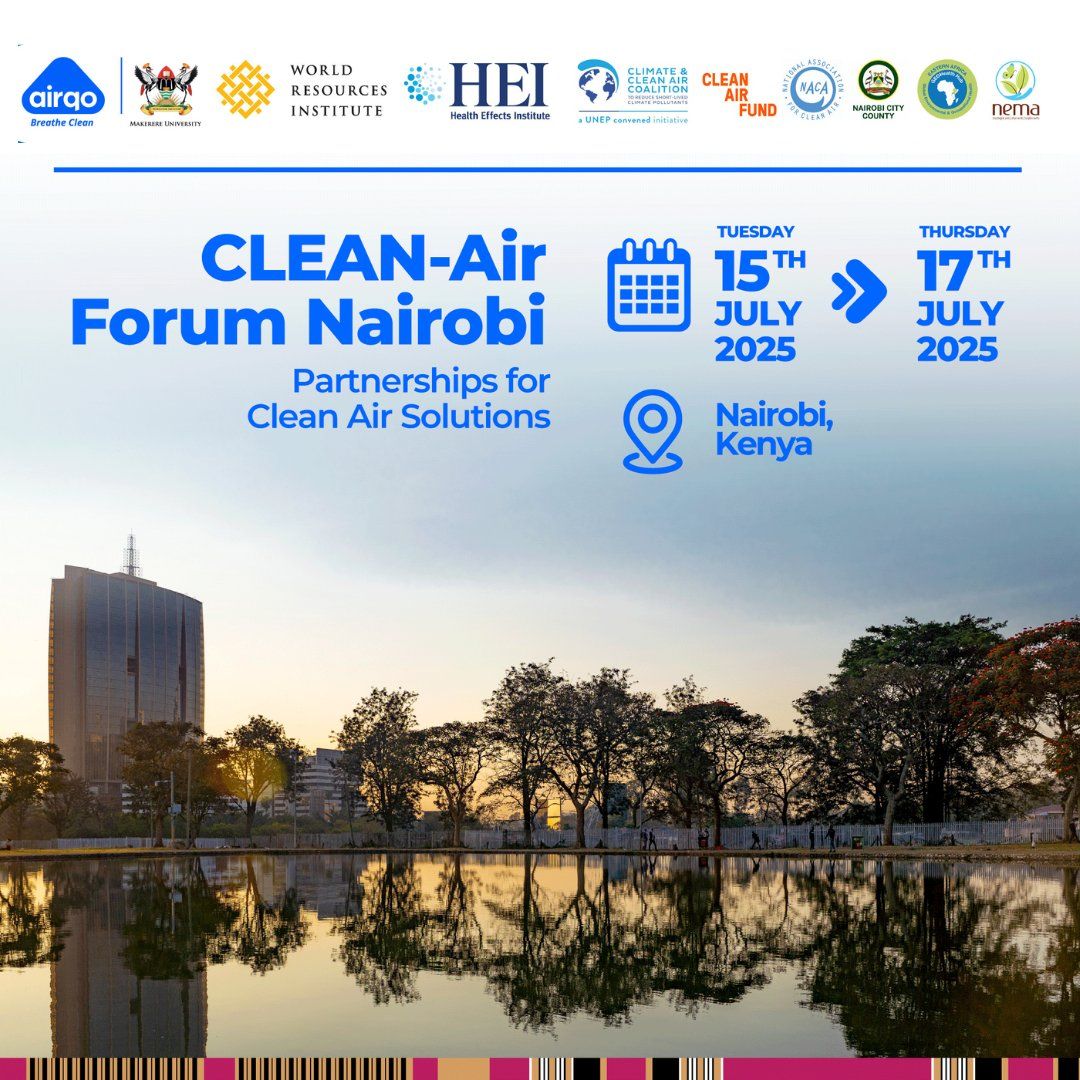
Nairobi, Kenya— Over 300 air quality experts, policymakers, researchers, development partners, and grassroots leaders from across Africa and beyond have converged in Nairobi for the third edition of the CLEAN-Air Forum, a pan-African platform tackling the escalating crisis of air pollution on the continent.
Held from July 15th to 17th under the theme “Partnerships for Clean Air Solutions,”the forum is a joint initiative by AirQo, the Health Effects Institute (HEI), and World Resources Institute Africa (WRI), in collaboration with the Nairobi City County Government. It builds on the momentum from past editions in Kampala (2023) and Lagos (2024).
According to the organisers, this year’s gathering marks a major milestone in Africa’s environmental dialogue by fostering collaboration between governments, researchers, civil society organisations, development actors, city authorities, youth leaders, and private sector players to address one of the continent’s most critical public health and environmental challenges.
“The CLEAN-Air Forum has become Africa’s leading platform for driving evidence, innovation, and equity in air quality,” said Wanjira Mathai, Managing Director for Africa and Global Partnerships at WRI. “The theme, Partnerships for Clean Air Solutions, is a timely reminder: no one city, country, or community can solve this crisis alone. We have to work together.”
According to a recent HEI Scoping Review titled “Health Effects of Air Pollution in East Africa,” approximately 294,000 deaths in the region were attributed to air pollution in 2021, making it the second leading cause of mortality, only behind malnutrition. The study also highlighted that biomass fuel and vehicle emissions are the primary culprits, exacerbated by limited air quality monitoring across East Africa.
Despite Nairobi’s reputation as an environmental hub, the city has fewer than 100 publicly accessible air quality monitors. These have been installed through joint efforts by AirQo, Breathe Cities, UNEP, the GEOHealth Hub, and the Nairobi City County Government. The city is now being recognised for taking bold steps to fill this data void.
“Air pollution remains a major public health and environmental threat, both locally and globally,” said H.E. Johnson Sakaja, Governor of Nairobi City County. “The data we have must drive inclusive and informed action. This forum will unite leaders, experts, civil society, and citizens to share policies that protect our health and our city’s future.”
As one of the keynote speakers, Dr. Babatunde Ajayi, General Manager of the Lagos State Environmental Protection Agency (LASEPA), praised the value of continental cooperation:
“When we collaborate, we share expertise, benchmark standards, and speak with one voice,” Dr. Ajayi said. “The CLEAN-Air Forum is helping African cities build that shared language and vision.”
Dr. Mathew Ochieng Owili, Deputy Governor of Kisumu, echoed the sentiment, noting the advantages of collective policy and data sharing.
“Through shared data, harmonised policies, and joint strategies, cities can access more funding and implement innovation faster,” said Dr. Owili. “I hope this forum catalyses a united front, bigger investments, stronger commitments, and new partnerships for clean air.”
A highlight of this year’s forum is the unveiling of a renewed vision for the Africa Clean Air Network, a growing alliance of stakeholders dedicated to transforming Africa’s air quality landscape. Launched during the first forum in Kampala, the network has since emerged as a continental force, bridging the gap between science and policy, expanding access to air quality data, raising public awareness, and pushing for transformative policy reforms.
The CLEAN-Air Forum, short for Championing Liveable urban Environments through African Networks for Air, has grown into Africa’s premier annual gathering for advancing evidence-based, Africa-led clean air actions. Convened by the Africa Clean Air Network, it provides a space for mutual learning, showcasing innovative tools, and aligning city and national efforts with global sustainable development and health goals.