

By Collins Odigie Ojiehanor
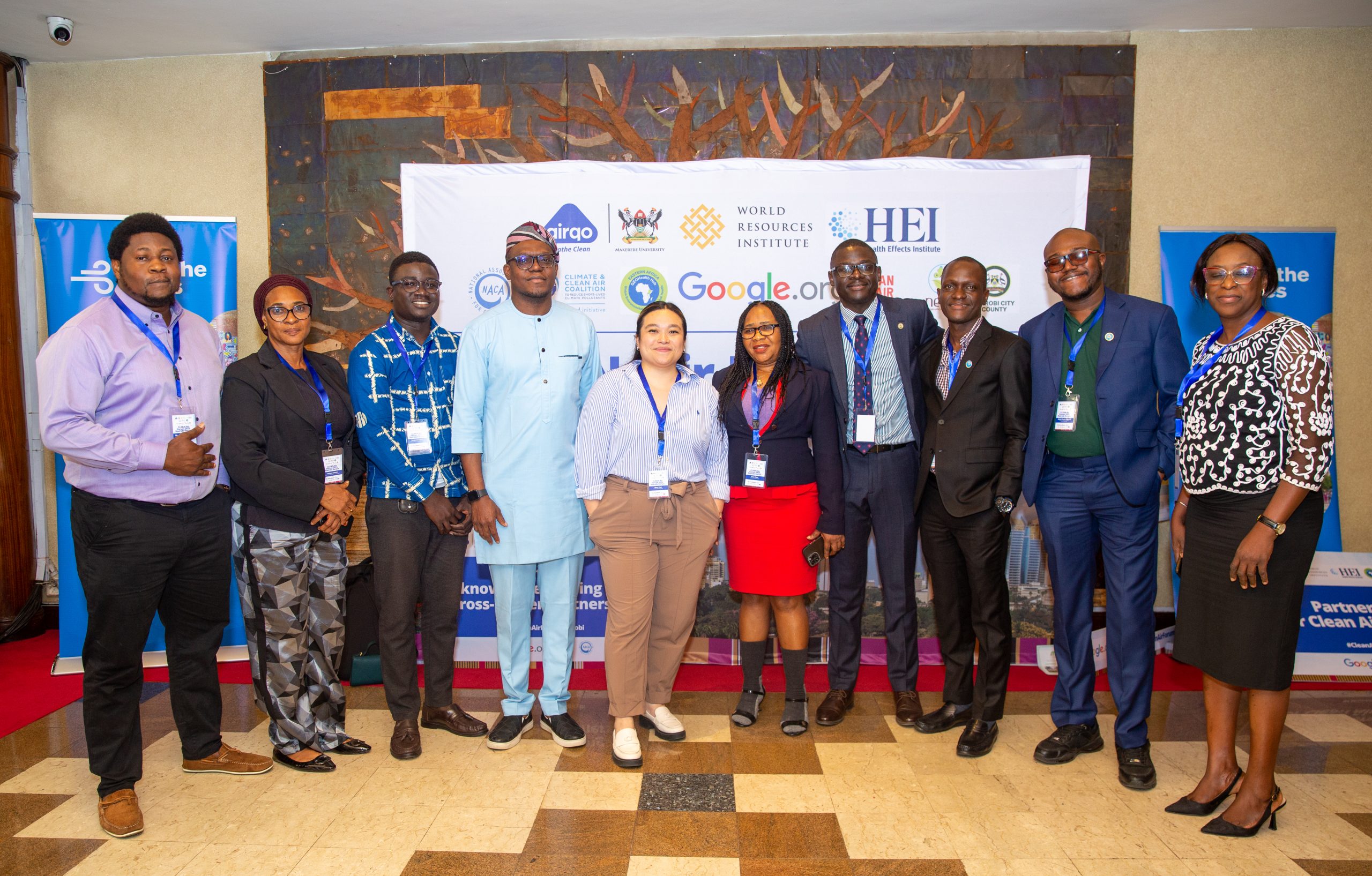
With Africa’s urban populations surging and the health costs of air pollution escalating even faster, the CLEAN-Air Forum 2025 in Nairobi underscores a compelling truth: clean air demands collective effort, innovative technology, and policies that transcend borders. Across the continent, worsening air quality, fueled by rising smog, choking emissions, and rapid urbanization, has become a silent yet deadly crisis, claiming hundreds of thousands of lives each year and threatening the health and future of Africa’s cities.
Experts at the CLEAN-Air Forum 2025 in Nairobi calls for strategic efforts to confront Africa’s air pollution crisis head-on, rallying around the need for policy frameworks, transdisciplinary collaboration, and innovation that transcend borders. Among the keynote voices was Dr. Tunde Ajayi, General Manager of the Lagos State Environmental Protection Agency (LASEPA), who emphasised that the future of Africa’s clean air agenda hinges on data-driven policies, robust financing, and collaborative partnerships.
Addressing delegates, Dr. Ajayi underlined the urgency of cross-border collaborations that integrate science, data, and financing to protect the continent’s most vulnerable communities. For him, the path forward is clear: Africa must harness technology, mobilise resources, and build lasting partnerships to secure the fundamental right to breathe clean air.
Lagos: A Testbed for Air Quality Innovation
Africa’s clean air crisis is no longer an abstract threat, it is a measurable economic and public health burden. A 2020 World Bank study on The Cost of Air Pollution in Lagos, revealed that in 2018, illnesses and premature deaths caused by ambient air pollution resulted in $2.1 billion in economic losses, equivalent to 2.1% of Lagos State’s GDP.
That same year, 11,200 people died prematurely, the highest toll in West Africa. Children under five were the most affected, accounting for 60% of the deaths, while adults suffered from heart disease, lung cancer, and chronic obstructive pulmonary disease (COPD).
Speaking during the session “Cross-Border Transdisciplinary Collaborations for Clean Air in Africa”, Dr. Ajayi recounted Lagos’ experience as host of the 2024 CLEAN-Air Forum, noting how the event ignited unprecedented interest from technology innovators, financiers, and researchers in air quality initiatives.
“One important thing I thought I would say on this platform is to highlight the importance of good work. The good work that AirQo started I think has now grown way beyond what they had foreseen. So we have now triggered a lot of interest from different places. As a matter of fact, hosting the Clean Air Forum in Lagos last year triggered start-up capital of Africa. In Lagos, we have tech start-ups, five unicorns, and all of them started calling. Everybody wanted to be involved in air quality management. Everybody was interested,” Dr. Ajayi told participants.
He explained that Lagos now has thriving ecosystems powered by data and partnerships such as air quality technology (AQ Tech), air quality financing (AQ Finance), and air quality research (AQ Research), built on research pioneered by the University of Lagos Air Quality Monitoring Group.
“People are looking at, how can we bring finance to air quality monitoring? Because without finance, everything you say doesn’t work. Money moves everywhere. Money moves everything you want to say,” Dr. Ajayi added, applauding the university group’s groundbreaking research.

Why Policy Frameworks Matter
As both a medical doctor and policymaker, Dr. Ajayi shared how his experience leading the oxygen strategy during the COVID-19 pandemic deepened his understanding of clean air’s vital importance to life.
“One thing I would say has driven my interest in clean air and has made me highlight it as a priority for the EPA (Environmental Protection Agency) of Lagos is the fact that five years ago, the world shut down from COVID. At the time, I was working in the Ministry of Health. Primarily I’m a doctor. And I was in charge of oxygen. I saw how important it was to have clean air. I know how many people died across the world from exposure to germs and how the test is important to life,” he said.
In a recent reportin The Lancet Planetary Health by the Boston College Global Observatory on Pollution and Health, air pollution was responsible for 1.1 million deaths across the continent in 2019. Household air pollution, driven largely by indoor cookstoves, accounted for 700,000 fatalities, while ambient outdoor pollution claimed an additional 400,000 lives.
Dr. Ajayi emphasised that meaningful progress in air quality management cannot occur in isolation. He described active cross-border partnerships with Kenya and Uganda, facilitated through data sharing, collaborative research, and memoranda of understanding.
“We think that we may not be able to efficiently manage air pollution, or efficiently curate work around clean air unless we collaborate effectively, we have cross-border MOUs with different partners, the Air Quality Research Monitoring Group, we have the AQ Finance now, we have the AQ Tech people who have developed monitors locally within Lagos,” he explained.
Open data access, he added, has proven transformative in Lagos, spurring public interest and driving behavioural change. “Sharing data openly and publicly drives a lot of interest. And this is one thing that we have found out in Lagos. More people, in fact, up to the journalists, the key journalists in Lagos are very much interested in our air quality data because it helps them think about pollution. It drives the knowledge of pollution in the society. School students are beginning to ask questions: How can I reduce pollution in my own small space?”
He also connected air pollution to everyday realities in Nigeria, where reliance on fossil-fuel generators contributes significantly to emissions. “Most of us, we still generate electricity using power generating sets that leverage fossil fuel and, of course, increase pollution. So with these conversations with people and sharing this data, people are able to see that, well, my generating set gives me electricity, but if I can convert to clean energy, I’ll reduce pollution in my own personal space. And in turn, it reduces pollution across board,” he noted.
Innovations in Monitoring and Transport
According to a Clean Air Fund report, under a business-as-usual (BAU) scenario, air pollution could cost $137.8 billion in lost productivity and healthcare expenses across Accra, Cairo, Johannesburg, Lagos, Nairobi, and Yaoundé between 2023 and 2040. In megacities such as Lagos and Nairobi, vehicle emissions alone account for up to 50% of PM₂.₅ pollution, driving the adoption of measures such as vehicle emissions testing and the rollout of electric buses to curb harmful exhausts.
Highlighting partnerships that have allowed Lagos to localise the production of air quality monitors, Dr. Ajayi said collaborative efforts are making monitoring more cost-effective and widely accessible. He cited initiatives with the Lagos Metropolitan Area Transport Authority (LAMATA), demonstrating how science-backed policies reduce urban pollution, by monitoring emissions across a fleet of over two million vehicles currently present in Lagos, one of the city’s biggest sources of fine particulate matter (PM2.5).
“The Metropolitan Agency manages public transport. So we have trains now, we have public buses, and those public buses, along their routes, have air quality monitors attached to them, and the Metropolitan Agency with collaboration is able to convert to clean energy. Some of the buses are now electric buses, and we have seen reasonable impact,” he said.
Dr. Ajayi added that private vehicle owners undergo annual emissions checks, with non-compliant vehicles failing clearance.
Scaling Impact Through Partnerships
Reflecting on the catalytic role of the CLEAN-Air Forum, Dr. Ajayi credited AirQo collaborations and cross-border partnerships for accelerating Lagos’ clean air agenda. “From the last Clean Air Forum, we have inspired a whole new group of people to first get involved, to put in money, technology, and interest, and also drive partnerships across the African continent,” he stressed.
Dr. Ajayi settled by reaffirming that Africa’s clean air future depends on data-driven policies, cross-sector financing, and transdisciplinary partnerships. “With that management, we’ve been able to identify the key sources, and maybe on another forum, or at another time, I will share all of the success stories,” he noted.
Air pollution continues to be one of the most pressing threats to global health, contributing to an estimated 231 million disability-adjusted life years (DALYs) each year and significantly adding to the global burden of disease. According to the State of Global Air 2024 report, air pollution was responsible for 8.1 million deaths worldwide in 2021, making it the second leading risk factor for death, including among children under five. Of these fatalities, nearly 90% were caused by noncommunicable diseases such as heart disease, stroke, diabetes, lung cancer, and chronic obstructive pulmonary disease (COPD).
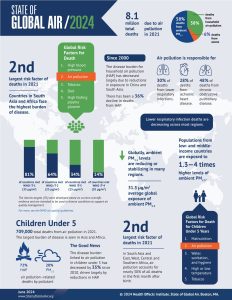
More than 700,000 deaths among children under five or 15% of all global deaths in that age group were linked to air pollution, with household air pollution driving a higher share of deaths in Africa, South Asia, and other low-income countries. At the same time, ambient (outdoor) air pollution accounted for over 5.7 million deaths globally in 2020, incurring economic damages of US$4.5–6.1 trillion annually, equivalent to 4.7–6.5% of global GDP, according to a World Bank report.
Alarmingly, 99% of the world’s population breathes air that exceeds World Health Organization (WHO) air quality guidelines, with the burden falling disproportionately on low- and middle-income countries. Approximately 95% of all air-pollution-related deaths occur in developing nations, where economic growth often coincides with heavy reliance on polluting technologies. Of the 2.5 billion people exposed to hazardous PM₂.₅ concentrations above 35 µg/m³, the majority live in South Asia (1.2 billion), East Asia (660 million), and significant numbers in Sub-Saharan Africa (330 million) and North Africa and the Middle East (224 million).
With Africa’s urban populations projected to grow by 60% by 2050, the urgency for coordinated action is mounting. The consensus from Nairobi is clear: Africa has the tools to rewrite its air quality story. Achieving that vision will demand bold leadership, innovative policies, and communities empowered to defend their right to breathe clean air.