

By Collins Odigie Ojiehanor
As the skies turned an eerie orange over New York and Chicago in June 2023, millions of Americans got a taste of what much of the world lives with every single day. Wildfire smoke from Canada drifted across borders, forcing families indoors, cancelling outdoor sports, and sending vulnerable residents rushing for masks and air purifiers. For many, it was a shocking reminder that clean air cannot be taken for granted. These smoke-filled weeks were not an anomaly but part of a worsening global trend.
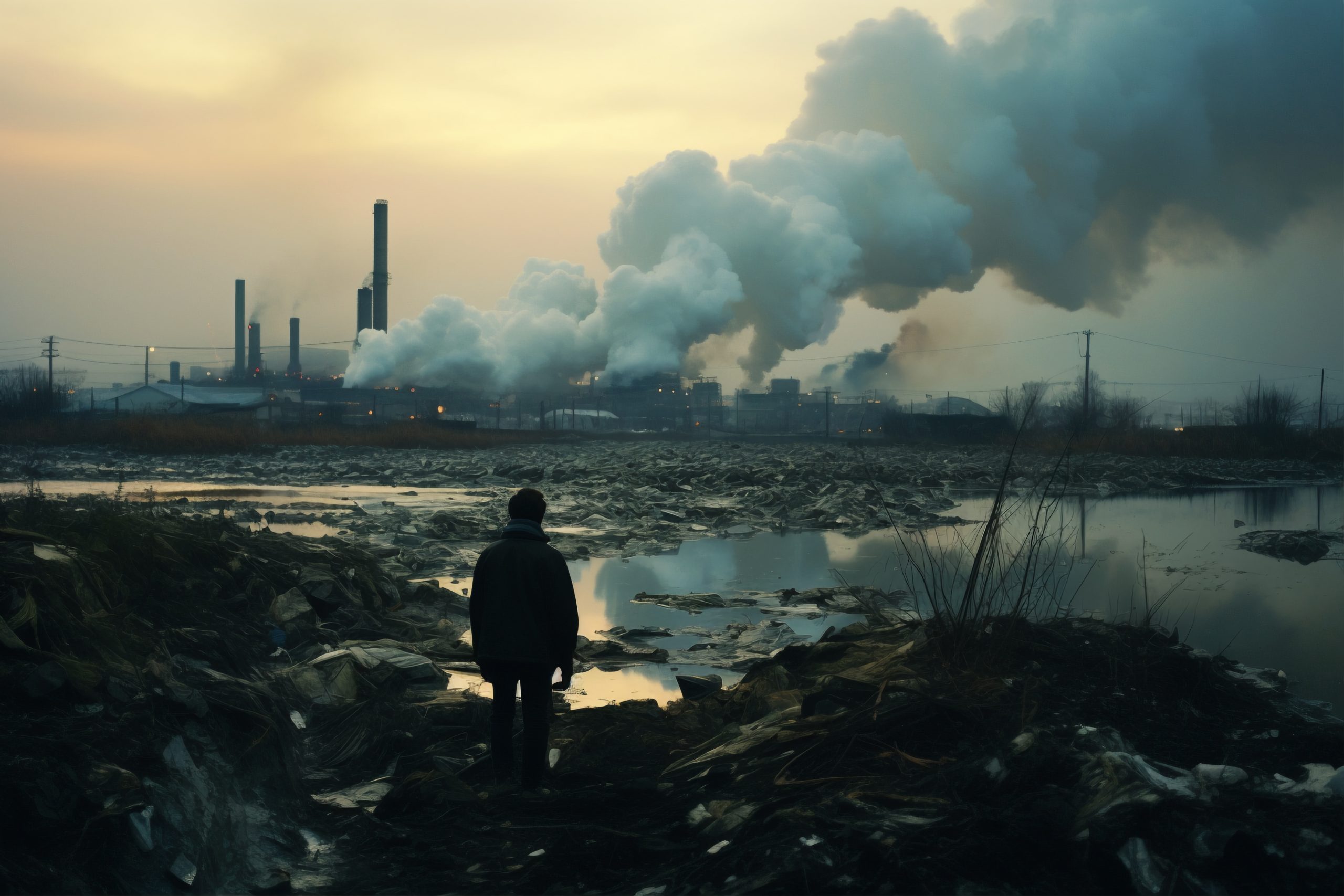
Air pollution remains the world’s deadliest environmental threat, slashing nearly 15 billion years from global life expectancy, according to the 2025 Air Quality Life Index (AQLI) Annual Update released by the Energy Policy Institute at the University of Chicago (EPIC).
The AQLI report finds that global concentrations of fine particulate matter (PM2.5) rose by 1.5% in 2023 compared to 2022, reaching nearly five times the World Health Organization’s (WHO) safe guideline of 5 µg/m³. If pollution levels were permanently reduced to meet this guideline, the average person would gain 1.9 additional years of life.
“Particulate pollution is now the single greatest external threat to human health—more dangerous than smoking, alcohol, or unsafe water,” the report stated. Its impact on life expectancy is four times that of alcohol use, five times that of road accidents, and more than six times that of HIV/AIDS.
North America, once a model of clean air progress, saw those gains reversed in 2023. Canada experienced its worst wildfire season on record, burning over 18 million hectares, according to reports. Smoke drifted south, pushing U.S. pollution levels to their highest in more than a decade.
The Regional Findings
- South Asia remains one of the most polluted regions globally. Despite slight fluctuations, air quality levels are so severe that residents in the most polluted areas lose up to five years of life expectancy compared to WHO standards.
- Central and West Africa continue to suffer some of the worst health outcomes from air pollution, with residents in highly polluted areas losing up to 5 years of life expectancy, surpassing threats from HIV/AIDS, malaria, and unsafe water.
- China, after a decade of progress under its “War on Pollution”, recorded a 2.8% increase in particulate pollution in 2023, the first significant uptick since 2014 .
- North America saw dramatic setbacks. Wildfires in Canada and the U.S. pushed PM2.5 concentrations to their highest levels in decades, reversing years of gains. Over 50% of Canadians breathed air that exceeded their national standard, compared with less than 5% in previous years.
- Europe shows signs of sustained improvement, with policies and bans on coal heating boosting life expectancy gains, particularly in countries like Poland.
- Oceania remains the cleanest region, with residents breathing the world’s safest air.
The Monitoring Gap
While headlines focus on Asia or North America, Central and West Africa face some of the deadliest air on Earth. Despite its staggering toll, air pollution remains low on the political agenda in many countries. The AQLI highlights that 68% of the global population lives in countries with fewer than three government-operated air monitors per million people, making it difficult to track progress or enforce clean air policies.
Yet, until recently, these countries had no government-operated air monitoring systems. Without data, there was little political urgency. That began to change with the launch of EPIC’s Air Quality Fund in 2024, supporting about 31 organizations across 19 countries to install over 700 monitors. These efforts have already sparked policy reforms, including The Gambia’s first clean air legislation and the creation of the Democratic Republic of Congo’s first air monitoring network.
A Call to Action
The report stresses that while data transparency drives action, information alone cannot solve the crisis. “Investments in monitoring must be matched by political will, ambitious policies, and enforcement,” said Michael Greenstone, co-author of the report and Director at EPIC.
Ultimately, the AQLI frames air pollution as a global public health emergency—one that demands the same urgency as climate change and infectious diseases. Without immediate action, billions will continue to lose years of healthy life to dirty air.