

By Collins Odigie Ojiehanor
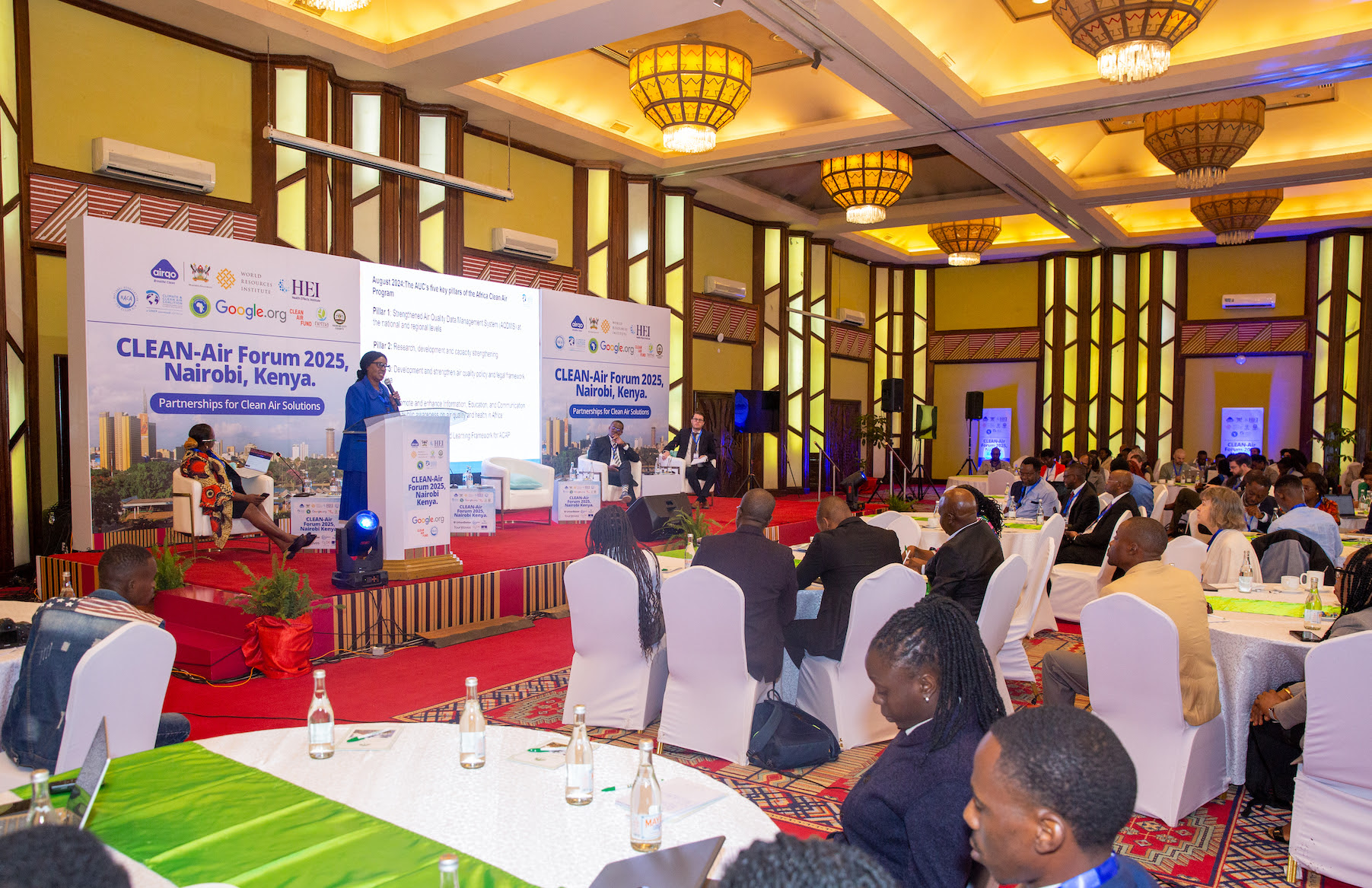
Nairobi, Kenya— A powerful opening to the 2025 CLEAN-Air Forum has set the stage for a renewed continental effort to tackle Africa’s air pollution crisis. Over 300 delegates from 35 countries gathered in Nairobi on Tuesday, July 15th, 2025, to commence the third edition of the annual CLEAN-Air Forum, a growing pan-African platform advancing evidence-based policies and partnerships for cleaner air in African cities.
Themed “Partnerships for Clean Air Solutions,” the forum is co-organised by AirQo, the Health Effects Institute (HEI), and the World Resources Institute (WRI) Africa, in collaboration with the Nairobi City County Government. The three-day event runs from July 15th to 17th, building on the momentum of previous editions held in Kampala, Uganda (2023), and Lagos, Nigeria (2024).
“This forum serves as a vital platform to exchange knowledge, showcase innovative solutions, and foster collaborations that can drive meaningful change,” said Geoffrey Mosiria, Chief Officer, Environment, Nairobi City County. “The significance of our collective efforts cannot be overstated, especially as we face increasing challenges related to air pollution in urban centres and vulnerable regions worldwide,” he added.
Forum Objectives and Regional Imperatives
The forum seeks to drive progress through four main objectives:
- Promoting evidence-informed policy development across African cities;
- Advancing technology through the use of low-cost sensors, artificial intelligence, and remote sensing;
- Consolidating emerging opportunities, including sustainable financing and private sector-led solutions;
- Fostering regional cooperation in alignment with the United Nations Environment Assembly (UNEA-6/10) resolution on cross-border air quality management.
Speakers at the opening underscored the need for stronger data systems, inclusive public policy, and long-term investment in clean air infrastructure. “We cannot manage what we cannot measure,” said Professor Engineer Bainomugisha, AirQo Lead.
“By building robust air quality data systems, we create templates for cities to mainstream air quality management,” he affirmed. He added that the Nairobi forum signals a continental shift toward shared, data-driven clean air solutions.
A Shared Vision for Africa’s Urban Future
With Africa’s urban population projected to grow from 50% to 60% by 2050, experts say clean air must become a fundamental pillar of sustainable city planning.
“With our cities growing rapidly, 50% of the population today is expected to rise to 60% by 2050, defining clean air solutions through collaboration is non-negotiable,” said Mwandawiro Granto, CECM, Taita Taveta County, and Vice Chair of the CECMs Caucus, who referenced Kenya’s PPP Act 2015 as a legislative framework to support multi-stakeholder partnerships.
Representing one of Kenya’s fastest-growing urban centres, Dr. Mathew Owili, Deputy Governor, Kisumu County, emphasised early implementation.
“We have five major cities in Kenya. If we start now, we can ensure that each one puts systems in place to guarantee clean air for its people. Conferences like this teach us; now it’s on policymakers to implement,” he stated.
The forum’s keynote plenary, titled “Cross-Border Transdisciplinary Collaborations for Clean Air in Africa,”laid the groundwork for an integrated policy-science-investment agenda. It emphasised three takeaways:
- Africa’s air pollution crisis needs a collaborative, inclusive, and data-driven response.
- Shared frameworks and regional strategies are crucial to scaling impact;
- Localised data, when translated into insights, must drive real policy and public engagement.
Addressing Household Air Pollution
A session on Household Air Pollution (HAP) examined the impact of cooking practices on public health, climate, and household economies. Case studies from Kenya, Uganda, and Ethiopia explored the importance of adopting cleaner cooking technologies and inclusive energy policies.
“The path to clean cooking in African countries starts with equity,” said Mr. Perez Mweine, Program Assistant at WePlanet Africa, stressing the importance of ensuring households have the tools and resources to transition.
Urban Air Quality and Emerging Technologies
Another highlight, the Next Generation of Urban Air Quality Management session, brought together researchers and experts from Africa and Europe to explore how real-time monitoring, low-cost sensors, and satellite data can close Africa’s vast data gaps.
Insights were shared from projects in Ghana, Nigeria, Kenya, and across Europe. Discussions revealed how source apportionment techniques can help cities identify pollution sources and tailor interventions.
Dr. George Mwaniki, World Resources Institute Africa Country Representative for Kenya and the Head of Air Quality, voiced concern over the persistent gap between research findings and policymaking in Nairobi. He highlighted that there’s a disconnect between scientific research and policy in Nairobi, and a deeper engagement between researchers and policymakers is needed to create actionable and funded air quality plans.”
Tackling Transport-Related Air Pollution
The session on Transport-Related Air Pollution (TRAP) focused on Africa’s rapidly expanding transport sector, a significant contributor to urban air pollution. Speakers discussed investment in non-motorised transport, clean mobility strategies, and awareness campaigns. African and global case studies offered a blueprint for cities to reduce emissions while improving urban mobility.
Participants closed the session with a strong call for political will, regional cooperation, and regulatory reform, urging African governments to treat clean transport as a public health priority.
Clean Air: A Shared Future
As the forum continues through July 17, the recurring message from delegates is clear: air pollution is a shared challenge that demands shared solutions. From science and policy to innovation and investment, Africa’s path to clean air lies in building intentional, sustained, and cross-sector partnerships.
With a renewed sense of urgency and cooperation, the CLEAN-Air Forum is laying the foundation for Africa’s clean air future, one defined by inclusion, innovation, and impact.