

By Patrick Omoake
When Ugandan conservationist Brian Tumwesigye first visited Bugala Island on Lake Victoria, he was struck by its beauty. Fishermen casting their nets at sunrise, birds calling across the shimmering water. Yet amid the splendour, he saw a darker story unfolding. Waste clung to the shores. The fish populations were dwindling. The communities that had once thrived along the lake’s edges were struggling.
“That moment changed everything,” Tumwesigye recalls. “I realized that conservation wasn’t just about saving nature. It was about protecting people’s way of life.”
That realization became the heartbeat of Pause Conservations, a Ugandan non-profit founded to reconnect children and communities with the natural environment that sustains them. Through education, storytelling, and experiential learning, the organization is helping reshape how communities perceive and protect Lake Victoria, Africa’s largest freshwater lake and one of the most threatened ecosystems on the continent.
From Awareness to Action
The challenges facing Lake Victoria are well documented: pollution from waste and runoff, habitat loss, invasive species, and declining fish stocks. Yet, as Tumwesigye explains, “Behind all these challenges is a deeper issue: people have become disconnected from the environment that sustains them.”
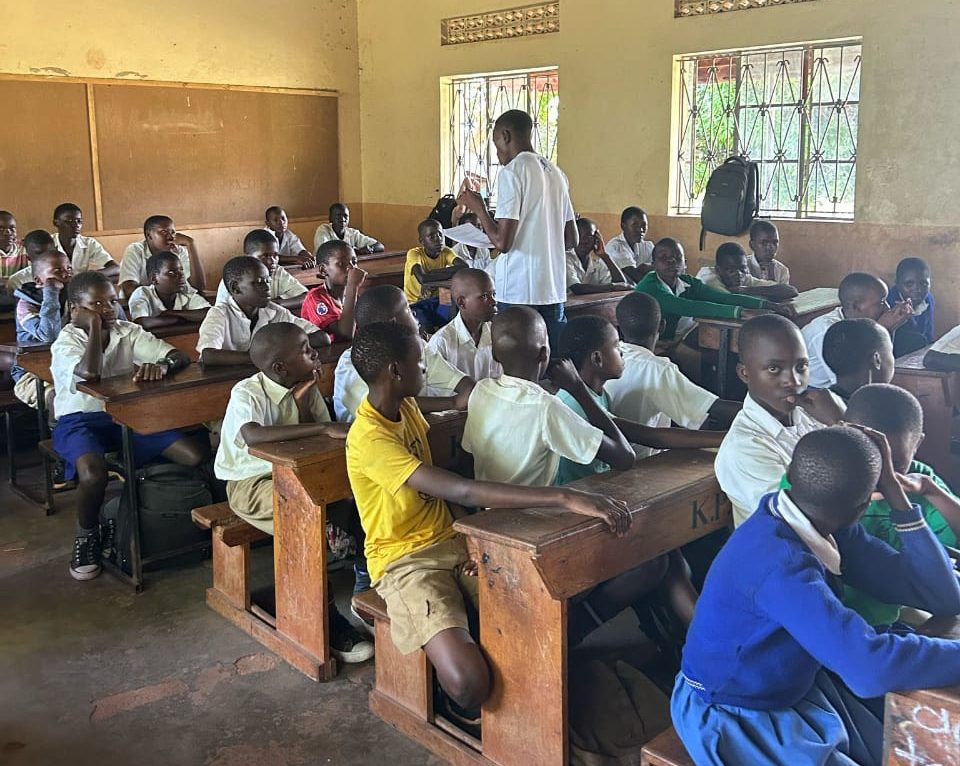
Pause Conservations’ approach to change is deceptively simple: rebuild that lost connection. Through its programs, the organization hosts interactive storytelling sessions, community nature retreats, and school-based environmental workshops. Each activity is designed to simplify complex ecological ideas, transforming them into stories that children and families can relate to.
“We don’t lecture,” Tumwesigye says. “We awaken curiosity and empathy. When people understand why the lake matters to them, they begin to act, not because they were told to, but because they care.”
Chali’s Adventures: Teaching Conservation Through Story
One of Pause Conservations’ most celebrated initiatives is the children’s book Chali’s Adventures on Lake Victoria, written by Tumwesigye himself. In the story, a young animal named Chali explores the lake’s ecosystem, meeting different species and confronting threats like pollution and habitat loss.
“It’s not just a book,” Tumwesigye explains. “It’s a bridge between science, curiosity, and empathy.”
During reading sessions in primary schools, children engage with the story’s themes in surprisingly personal ways. One child once asked, “If the animals lose their homes, where will they sleep?” Another wanted to know, “Who helps the fish when their homes are dirty?”
“That innocence captures everything,” says Tumwesigye. “Children already have the compassion needed for conservation. Our job is to guide and nurture it.”
Teachers who have used the storybook in classrooms say it transforms environmental education from abstract lessons into lived experiences. “Students start calling it ‘our lake,’” Tumwesigye adds. “That’s when you know something is changing.”
Measuring Change in Hearts and Habits
Unlike traditional conservation programs that measure success through data alone, Pause Conservations looks for transformation—changes in how people think, speak, and act toward their environment.
“If a child starts a conversation about waste at home, or if a teacher adds environmental storytelling to their lessons, that’s impact,” Tumwesigye says. “We measure success through engagement and curiosity, when schools continue discussions long after our sessions, or when communities invite us back to collaborate further.”
The organization’s vision is to inspire one million children by 2030, creating a generation that views conservation not as a campaign but as a way of life.
Sustaining Change Through Collaboration
Building sustainable change, however, requires more than passion. For years, Pause Conservations operated on minimal resources, relying on volunteer energy and goodwill. “That experience taught me that passion alone cannot sustain impact,” Tumwesigye admits.
To keep the work alive, the organization is creating socially conscious revenue streams , from sales of educational storybooks and nature retreats to partnerships with like-minded initiatives such as Dragonflies Everywhere, Catalyst 2030, and AIESEC Uganda.
“Mentorship and collaboration have been key,” he says. “We’ve learned to grow strategically, build trust, and create programs that sustain themselves long after we’re gone.”
A Generation That Sees the Lake as Family
Ultimately, Pause Conservations is less about activism and more about awakening. “I hope the next generation sees Lake Victoria not as scenery, but as a living relative,” Tumwesigye says. “If they grow up seeing themselves as custodians rather than consumers of nature, we’ll have succeeded.”
His dream is for every Ugandan child to grow up understanding that environmental care is not a task but an identity, a cultural inheritance to be cherished.
“We’re not telling them what to think,” he adds. “We’re helping them see they’re part of something bigger.”
The Bigger Picture: Lessons for Global Conservation
Pause Conservations’ work reflects a global truth about conservation: real change begins not in policy rooms, but in people’s hearts. By blending education, storytelling, and emotional connection, the organization shows that protecting ecosystems like Lake Victoria requires more than science; it requires soul.
“Conservation starts when we slow down, listen, and care,” Tumwesigye says softly. “That’s why we’re called Pause.”