

By Patrick Omoake
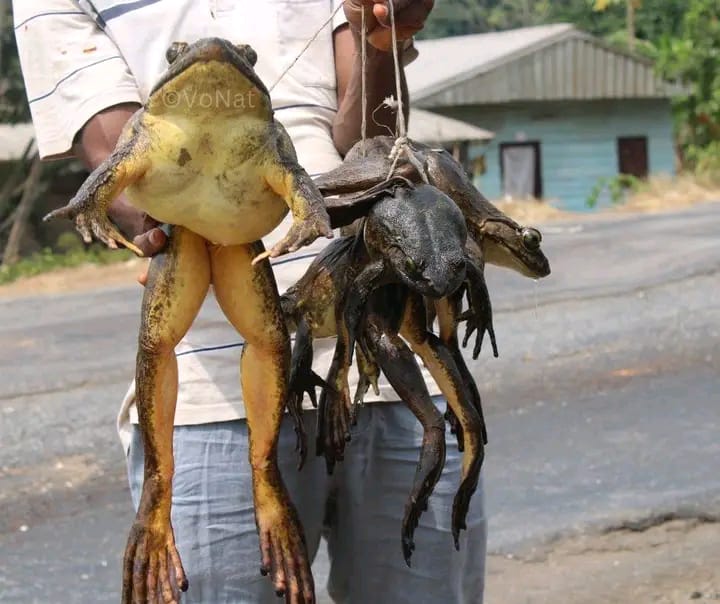
In the heart of Cameroon, where lush rainforests meet diverse wildlife, a quiet but powerful movement is underway to protect one of the country’s most unique and threatened species—the giant Goliath frog. Spearheading this effort is Shey Shanceline, a passionate environmental activist with Voice of Nature Cameroon, who has taken it upon herself to raise awareness and promote conservation of frogs, a group of amphibians often misunderstood and overlooked in mainstream environmental discussions.
Shanceline, who holds a degree in environmental science from the University of Buea, is deeply committed to protecting frogs, particularly the Goliath frog—the world’s largest frog species, found only in Cameroon and neighbouring Equatorial Guinea. Her mission goes beyond protecting a single species. It is about restoring balance to ecosystems, correcting public misconceptions, and inspiring a new generation to value biodiversity.
“Most people kill frogs because they consider them dirty animals or think all frogs are poisonous, but that’s not the case,” Shanceline explained. “During our outreach, we make people understand the importance of frogs to the ecosystem.”
Frogs: More Than Meets the Eye
Frogs play a vital role in ecological systems. They act as natural pest control by feeding on insects and other small invertebrates. Their permeable skin, which can absorb substances from their surroundings, also makes them sensitive indicators of environmental health. Moreover, the mucus on their skin has been found to possess antibiotic properties, offering promising avenues for medical research.
Yet, these crucial animals face multiple threats. The Goliath frog, in particular, is endangered due to habitat destruction, overhunting, and exploitation through the exotic pet trade. Without targeted conservation efforts, the species risks extinction.
Education as a Tool for Conservation
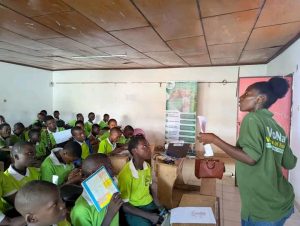
Understanding the importance of education in driving behavioural change, Shanceline and Voice of Nature Cameroon have been running educational outreach programs in schools and communities. These sessions are designed to shift public perception and build empathy toward amphibians.
“The rewarding part of working with kids is that they are interactive and have young minds, which helps them understand better,” Shanceline noted.
By teaching children and adults alike about the ecological significance of frogs, Shanceline hopes to foster a culture of environmental stewardship, where frogs are seen as allies in maintaining ecological balance, not threats or nuisances.
A Call for Collective Action
Shanceline’s message is clear: the conservation of frogs is not just the responsibility of environmentalists, but of all members of society. She emphasises that individuals and communities can take simple yet impactful actions, such as avoiding the killing of frogs, preserving natural habitats, and spreading awareness.
She also believes that governments have a significant role to play by enacting and enforcing protective policies.
“Governments can implement policies, such as fines or bans on the killing of threatened species,” she advised. “By working together, we can ensure the long-term survival of these fascinating creatures and preserve the delicate balance of our ecosystem.”
Voice of Nature Cameroon: A Broader Mission
The work of Voice of Nature Cameroon, where Shanceline serves as an activist, reflects a broader commitment to environmental protection. The nonprofit organisation is dedicated to creating a greener, safer, and more sustainable planet for both wildlife and humanity.
Among its numerous initiatives, the group has propagated over 10,000 trees for wildlife conservation in the Mount Cameroon region, organised beach cleanups, and provided training to local farmers on regenerative agricultural practices. These efforts aim to mitigate climate change impacts and ensure sustainable coexistence between humans and nature.
Looking Ahead
As Shanceline continues her journey to protect frogs in Cameroon, her dedication serves as an inspiring reminder that impactful conservation begins with awareness and education. Her grassroots work is not only helping to save a unique species but also shaping a generation that values all forms of life—no matter how small or misunderstood.
Through sustained efforts from local activists, communities, organisations, and policymakers, the hope for preserving frogs like the Goliath lies not in the hands of a few but in the collective responsibility of many.
Beautiful write up
Nice, interesting story. In the 1970s and 1980s many locations in India also lost many of its Frogs in 1000s as the frog legs were sold as delicacy in restaurants and even roadside eateries. Fortunately, a ban on frogs was imposed, however the frogs have yet to recover even after 40+ years as rapid developmental activities have polluted many ponds, pools and lakes where the frogs breed. N.SHIVA KUMAR [ New Delhi, India ]