

By Patrick Omoake
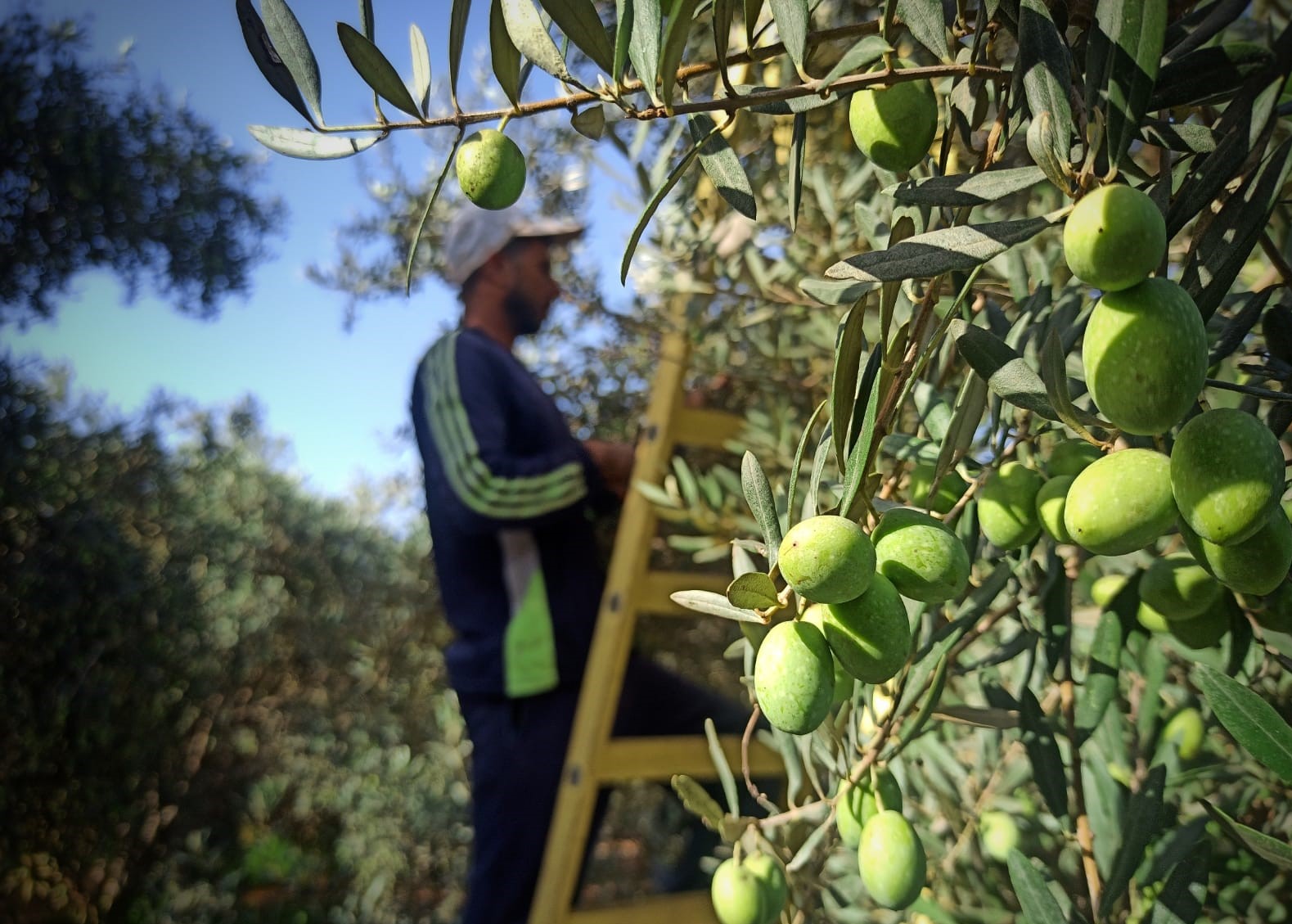
In the occupied West Bank, Palestinian olive farmers are grappling with a new level of violence and disruption that threatens not only their livelihoods but also a cultural heritage thousands of years old. Each year, the olive harvest season, typically a time of national pride and community celebration, has increasingly become a period marked by fear, attacks, and loss. Last October was described by many as “the most dangerous ever,” with a surge in settler violence carried out under the protection of Israeli occupation forces.
Farmers report being systematically targeted through arson, physical assaults, the uprooting and vandalism of ancient olive trees, and theft of their harvest. These violations have escalated alongside the war on Gaza, turning agricultural lands into conflict zones. For thousands of Palestinian families, whose income depends on the harvest, these attacks represent not only an economic crisis but a direct assault on their identity and existence. The olive tree, long seen as a symbol of Palestinian resilience, now stands at the frontline of a broader struggle for survival, heritage, and homeland.
In this in-depth interview, Alaa Hamza, an Egyptian journalist specializing in Palestinian affairs, sheds more light on the situation.
How do you assess the impact of Israeli settler violence on Palestinian olive farmers and their livelihoods?
Palestinian farmers in the occupied West Bank, especially olive farmers, face an unprecedented escalation of attacks and violations throughout the year, but more so during the harvest season. Last October’s harvest season was described as “the most dangerous ever,” with systematic intimidation, severe restrictions on access to land, and repeated attacks carried out by armed settlers under the protection of Israeli occupation forces.
Thousands of Palestinians depend on this season as their main source of livelihood, but the escalation of the war on the Gaza Strip in the last two years was accompanied by an increase in settler attacks, which included destroying trees, preventing farmers from harvesting the crop, and physically assaulting them.
Those affected told me about the increased attacks during the October-November olive harvest season, which include stealing fruit, uprooting trees, and threatening farmers with weapons. Settler attacks also escalate on the eve of the season, through arson, vandalizing fields, and stealing the harvest, turning the olive season from a national occasion into an open arena for violations.
What role can international support or intervention play in protecting Palestinian agricultural resources and heritage?
In light of the ongoing escalation against Palestinian farmers and the destruction of their agricultural resources, it becomes vital to talk about the role that international parties, whether at the governmental level or through civil society organizations, can play in providing protection and support to Palestinian farmers and preserving what remains of the agricultural heritage, which is an integral part of the Palestinian national identity.
There are many forms of intervention in this regard, from political and diplomatic pressure on Israel to stop violations against farmers, to sending international monitoring missions to protect farmers during the harvest season, to providing technical and financial support to strengthen the resilience of Palestinian farming communities.
I believe that protecting agricultural heritage, especially the olive tree, requires effective interventions from UN organizations and international bodies concerned with cultural heritage, to document violations and classify attacks on agricultural lands as a crime that threatens the environmental diversity and cultural identity of a people living under occupation.
I believe that any delay in international intervention means not only an economic loss, but a gradual loss of the landmarks of the Palestinian land and its thousands of years of cultural heritage, especially since the occupation authorities have imposed their control over natural resources and tightened the noose around farmers.
International support remains crucial not only to protect the livelihoods of thousands of families, but also to preserve the contours of a homeland that is slowly eroding under the weight of bulldozers and restrictions.
Can you share your perspective on the importance of olive trees in the Palestinian culture and economy?
For Palestinians, olive trees are not just fruit trees, they are a living symbol of the steadfastness of an entire people in their land. Their roots that go deep into the soil resemble their deep attachment to this land. The oldest olive tree in Palestine, in a village in the West Bank, is about 5,000 years old, with a circumference of approximately 25 meters and a height of 13 meters.
My documented information is that the oldest tree produces approximately 500 to 600 kilograms of olives. This is a testament to the depth of this connection. Olives in Palestine are not seasonal, but an integral part of popular culture. It is present in traditional tales, in songs and proverbs, in jokes and beliefs, and even in folk medicine.
Even at the level of social popular culture, olive oil is not just an ingredient in food, it is part of the rituals of daily life, from joy to sorrow, from food to medicine, from farming to art. The Palestinian does not use synthetic vegetable oils, because olive oil is the original, and it is what gives food its flavor and life its meaning.
According to my documented information, the number of fruitful olive trees in Palestine is about 8,901,757, of which 2 million are in the Gaza Strip. However, the recent Israeli aggression on Gaza led to the widespread destruction of this sector, leaving only 300,000 trees.
In the West Bank, about 27,300 tons of olive oil were produced during the last season, as about 146,650 tons of olive fruit were pressed, and about 10,000 tons of olives were pickled for the local market.
But despite these figures, the season took a heavy toll. Palestine lost the entire olive production of the Gaza Strip, which was estimated at around 40,000 tons of fruit annually, producing around 3,000 tons of oil. The West Bank also lost about 1,365 tons of olive oil as a result of the occupation preventing Palestinians from accessing 45,000 dunams of their land, located behind the Separation Barrier and near settlements.

How do restrictions on access to land and resources affect Palestinian farmers’ ability to maintain their livelihoods?
In the Gaza Strip, the ongoing Israeli war has destroyed about 85% of agricultural land, including vital crops such as vegetables, fruits and olives, resulting in losses estimated at around $400 million, according to preliminary estimates.
In the West Bank, the situation was no better. The 2023 olive season recorded heavy losses as more than 96,000 dunums of olive-planted land were prevented from being harvested due to Israeli military restrictions. These measures resulted in an estimated loss of 1,200 metric tons of olive oil, worth nearly $10 million.
I checked the reports of the United Nations Office for the Coordination of Humanitarian Affairs (OCHA), and it turns out that the 2024 olive season in the Palestinian territories witnessed increasing difficulties, as a result of severe restrictions on movement and escalating violence by settlers and Israeli occupation forces, which threatens to exacerbate economic and agricultural losses and threatens the livelihoods of thousands of Palestinian families who depend on this season as their main source of livelihood.
According to the Palestinian Ministry of Agriculture, the violations are not limited to olives, but include most fruit trees such as almonds, grapes, figs and citrus fruits, which are uprooted and deliberately burned. The occupation also deliberately destroys agricultural infrastructure, sabotages water sources, and pollutes wells, as part of a systematic policy aimed at undermining Palestinian food security.
Reports indicate that Israeli control over water resources is one of the most serious tools of pressure on the agricultural sector, as severe restrictions are imposed on water use, which increases the suffering of farmers and undermines their ability to remain on their land.
What strategies or initiatives are being implemented to support Palestinian farmers in facing these challenges?
In light of the increasing challenges faced by Palestinian farmers as a result of the Israeli occupation, local and international efforts are coming together to implement strategies and initiatives aimed at supporting their resilience and enhancing food security.
One of the most prominent recent initiatives is the “Seeds for Change” initiative launched by the Japan International Cooperation Agency (JICA) in cooperation with the Palestinian Ministry of Agriculture, which focuses on empowering farmers and addressing water scarcity through sustainable farming practices. The Food and Agriculture Organization (FAO) also provided financial grants to support small-scale projects, contributing to enhancing agricultural productivity.
In a symbolic and practical initiative, “Freedom Farms” was launched in the West Bank with the planting of 1,500 olive trees to promote Palestinian agricultural heritage. It continues to support agricultural infrastructure by building roads and markets to facilitate farmers’ access to markets.
There are older initiatives. The Palestinian Ministry of Agriculture previously launched the “Urgent Response to Those Affected by the Occupation” project, to rehabilitate damaged land and provide technical and financial support to farmers. Civil society organizations seek to promote food sovereignty through ecological agriculture and strengthen reliance on local resources.
In terms of international support, the European Union has allocated 17.5 million euros to rehabilitate agricultural projects in the West Bank and Gaza. Civil society organizations have also launched solidarity campaigns to protect farmers during harvesting and planting destroyed land. Organizations such as the Palestinian Fair Trade Association work to empower farmers and connect them to global markets, supporting the sustainability of their income.
These initiatives demonstrate a real commitment to supporting Palestinian farmers in the face of Israeli policies, and highlight the importance of local and international cooperation to preserve Palestinian agricultural heritage and promote food security in the occupied territory.
How do you think the international community can better support Palestinian farmers and promote sustainable agriculture in the region?Despite the importance of the initiatives that have been implemented to support Palestinian farmers, their success has been relative and has often collided with Israeli settlement ambitions and the occupation’s policies of Judaizing the land and restricting Palestinian presence, which have weakened the effectiveness of these initiatives in the long run.
The international community can play a more effective role in supporting Palestinian farmers and promoting sustainable agriculture by adopting a comprehensive approach that combines political pressure, economic support, and human rights advocacy.
The following is an integrated view of this role:
- Political and diplomatic pressure:
The international community, especially signatories to international conventions, must take serious action to hold Israel accountable for its ongoing violations against Palestinian farmers, exert real pressure to halt settlement expansion and open access to agricultural land that Palestinians are denied, especially those located behind the barrier or near settlements.
- Sustainable funding and technical support:
International actors should focus on funding long-term projects aimed at promoting agroecology and providing resilient agricultural infrastructure, such as modern irrigation networks, rainwater harvesting, and drought-resistant farming techniques.
- Protect farmers on the ground:
A symbolic UN or international presence can be organized in areas of friction during the harvest seasons, whether through international volunteers or monitoring teams, to protect farmers from settler and army attacks, enhancing their sense of security and giving them the opportunity to work their land without fear.
- Support production and marketing chains:
Palestinian farmers can be helped to access international markets through “fair trade” programs, support Palestinian agricultural labels, and facilitate the export of products, especially olive oil, thereby increasing their income and economic independence.
- Investing in food sovereignty:
Encourage initiatives focused on restoring the concept of “food sovereignty” by strengthening the local community, training farmers in sustainable agriculture, reviving indigenous seed varieties, and ensuring that agriculture is a tool of resilience rather than just a means of livelihood.
What message do you think the international community should takeaway from the suffering of Palestinian olive farmers?
The international community must realize that the suffering of Palestinian olive farmers is not just an agricultural issue, but a question of survival of culture, identity and livelihoods under occupation. These farmers are struggling not only to preserve their crops but to protect their heritage and the land that holds their history.
The international community must understand that this suffering is a direct result of policies of land confiscation, settlement expansion, and violence aimed at erasing Palestinian existence and culture. Solidarity and action are necessary to ensure that Palestinian farmers can continue their agricultural practices and maintain their connection to the land, which is an integral part of their identity and their right to live peacefully on their land.
The olive tree, which symbolizes peace, steadfastness, and connection to the land, is directly targeted because it represents the essence of Palestinian national identity. To harm it is to harm the culture and identity of an entire people.
The world must realize that defending Palestinian olive farmers is a defense of justice, human dignity, and the right of peoples to remain on their land and farm it freely. International silence in the face of this environmental and economic genocide is indirect complicity, but real action means stopping these policies, holding the perpetrators accountable, and ensuring the protection of land, people, and identity.
Can you discuss the impact of environmental degradation, such as wastewater pollution and waste dumping, on Palestinian agricultural land?
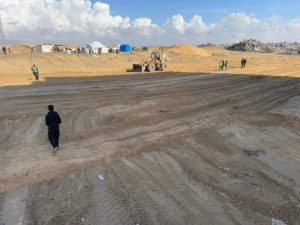
I took the initiative to monitor the catastrophic results. The greatest suffering in this context has been inflicted on the Gaza Strip due to the Israeli war on Gaza since October 7, 2023. A recent geospatial assessment, conducted by the Food and Agriculture Organization of the United Nations (FAO) and the United Nations Satellite Program – which uses satellites for peaceful purposes such as disaster monitoring and others – shows that orchards have been severely damaged. About 71.2 percent of fruit trees, including olive trees, have been destroyed, and more than two-thirds of agricultural irrigation wells – 1,531 in total – are out of service, causing the collapse of Gaza’s irrigation system.
Agriculture used to make up 10 percent of Gaza’s economy, and about 560,000 people depend on it, along with the fishing sector. Gaza’s agricultural soils have been severely damaged by the conflict. About 42.6% of agricultural land, or 6,694 hectares (15,940 acres), was destroyed, especially in the Gaza and North Gaza governorates.
The use of various munitions led to the contamination of the soil with chemicals, affecting its fertility and ability to support agricultural crops. Some of Gaza’s land may have become unfit for agriculture, and it is possible that explosives may have reached the groundwater. There needs to be a careful assessment of the levels of metals present to see if they can be successfully cultivated again.
UNEP’s report, released on June 19, 2024, warned of immediate and long-term threats to Gaza residents’ health, marine life and arable land. The report noted that the deployment of munitions containing heavy metals and explosive chemicals in densely populated areas of Gaza has contaminated soil and water sources, causing a new type of risk to the agriculture sector.
How do you see the future of Palestinian agriculture evolving in the face of ongoing conflict and occupation?
I believe that the future of Palestinian agriculture in light of the continued conflict and occupation seems worrying and fraught with challenges. Continued Israeli violations such as the destruction of agricultural land, restricting the movement of farmers, land confiscation, and repeated attacks by settlers directly weaken the infrastructure of the agricultural sector and negatively affect food security.
In the Gaza Strip, the environmental damage caused by the recent aggression has been catastrophic. A large percentage of agricultural land has been destroyed, and the soil has been contaminated by the use of internationally banned weapons, making replanting difficult in the short to medium term. Irrigation wells and olive presses have been destroyed, and large amounts of agricultural production have been lost.
In the West Bank, Israeli restrictions continue to prevent farmers from accessing their land, hinder agricultural production, and seize agricultural areas for settlement expansion, resulting in significant economic losses and affecting the sustainability of agricultural work.
Although there are local and international initiatives to support Palestinian agriculture, their impact will remain limited without effective protection for farmers, serious accountability for the occupation’s violations, and long-term technical and financial support.
What role do organizations like the Palestinian Fair Trade Association and the Million Tree Campaign play in supporting Palestinian farmers? in supporting Palestinian farmers?
In my opinion, organizations like the Palestinian Fair Trade Association and the Million Tree Campaign play a role in supporting Palestinian farmers, especially in light of the challenges imposed by the Israeli occupation. However, they face significant challenges due to Israeli policies that hinder Palestinian agricultural work. However, the continuous efforts of these organizations significantly contribute to strengthening the resilience of Palestinian farmers and preserving their agricultural heritage.
- Palestinian Fair Trade Association (PFTA):
The largest producer union in Palestine, it comprises over 2,000 small farmers and 200 female producers within 52 agricultural cooperatives in the West Bank. Founded in 2004, the association aims to empower farmers economically and socially by promoting organic farming and fair trade.
- The Million Tree Campaign:
Launched by “Arab Nature Conservation” in 2001. The campaign aims to combat the confiscation of agricultural land by the occupation through the planting of fruit trees, especially olive trees. Until now, the campaign has provided technical training to farmers to enhance their ability to manage their land sustainably.
Alaa Hamza is an Egyptian journalist, specializing in Palestinian affairs
Read her investigative report here:https://www.elaosboa.com/2202071/