


By Collins Odigie Ojiehanor
As the world marked World Environment Day on June 5, 2025, with the theme #BeatPlasticPollution, residents in Lagos, Nigeria’s commercial capital, are raising alarm over the persistent plastic waste crisis choking their communities.
Led by the United Nations Environment Programme (UNEP), World Environment Day 2025, hosted by the Republic of Korea, shines a spotlight on the escalating global plastic crisis. According to the UN, over 400 million tonnes of plastic are produced annually, with less than 10% recycled. A staggering 11 million tonnes end up in water bodies, while microplastics (plastic fragments smaller than 5mm) infiltrate food, air, and water, posing grave threats to human health and biodiversity.
Is Plastic Pollution Fuelling Floods?
In Lagos, the environmental toll of plastic waste is deeply felt not just in aesthetics or marine pollution but in daily flash floods and blocked drainage systems across low-lying communities. The experiences of residents underscore how the plastic crisis has become a public health and urban planning emergency.
“We are tired of this plastic wahala,” lamented Mrs. Kehinde Afolabi, a trader in Ketu. “Every time it rains, my shop gets flooded. You will see plastic bottles, nylon, and sachet water bags all floating and blocking the gutter right in front of my shop. Even after the government comes to clean, within a week the drain is blocked again. It’s affecting our business and health. Mosquitoes are plenty, and the water doesn’t go away for days,” she added.
For many, the cause is not just industrial plastic waste but indiscriminate disposal by residents and a lack of sustained environmental enforcement.
“From inside bus or keke, people just throw bottles and pure water nylon out the window,” said Mr. Chukwudi Okoro, a commercial tricycle driver at Iyana-Oworo. “The drainage wey dem do no fit work because plastic don block am. Government needs to arrest people wey dey throw waste anyhow,” he advised.
The consequences are severe. In many communities, once light rain is now enough to turn roads into rivers, creating breeding grounds for diseases and displacing homes.
“Plastic pollution is killing us silently,” said Miss Aisha Lawal, a student living in Ogudu. “When we opened the drainage after the last rainfall, we found mostly plastic waste nylons, bottles, food packs. People don’t understand that when they throw plastic on the ground, it doesn’t disappear. It finds its way to the gutter. And we, the residents, suffer it,” she lamented.

Plastic Waste: From Streets to Systems
Environmental experts warn that the challenge goes beyond visible pollution. Microplastics, formed from degraded plastic waste, have now entered the food chain and human body. Studies reveal that people may be ingesting over 50,000 plastic particles per year through food, water, and air.
In a powerful message marking World Environment Day 2025, the United Nations Secretary-General, António Guterres, urged countries around the world to act swiftly and decisively to tackle the plastic pollution crisis threatening the planet.
Speaking during a special World Environment Day broadcast, Guterres stated, “This World Environment Day focuses on solutions to beat plastic pollution. And rightly so,” he began.
“Plastic pollution is choking our planet, harming ecosystems, well-being, and the climate. Plastic waste clogs rivers, pollutes the ocean, and endangers wildlife. And as it breaks down into smaller and smaller parts, it infiltrates every corner of Earth: from the top of Mount Everest to the depths of the ocean; from human brains to human breastmilk.”
Guterres acknowledged the growing momentum for change across the world: “Yet there is a movement for urgent change. We are seeing mounting public engagement, steps towards reusability and greater accountability, and policies to reduce single-use plastics and improve waste management,” he said.
But he emphasised the need for accelerated action, especially as countries prepare to reconvene in August for a critical round of negotiations. “We must go further, faster. In two months, countries will come together to hammer out a new global treaty to end plastic pollution,” he noted.
“We need an ambitious, credible, and just agreement this year, one that covers the life cycle of plastic through the perspective of circular economies, that responds to the needs of communities, that aligns with broader environmental goals, the Sustainable Development Goals, and beyond, and that is implemented fast and in full.”
Guterres concluded with a passionate appeal: “I urge negotiators to return to talks in August determined to build a common path through their differences and deliver the treaty our world needs. Together, let’s end the scourge of plastic pollution and build a better future for us all.”
A Call to Action: Rethink, Refuse, Reuse
In a bid to combat rising environmental challenges and safeguard public health, the Lagos State Government, through its Ministry of the Environment and Water Resources (MOE&WR) has ramped up coordinated efforts with key agencies including the Lagos State Environmental Protection Agency (LASEPA), the Lagos Water Corporation (LWC), and the Lagos Waste Management Authority (LAWMA).
This intensified collaboration is focused on addressing pressing issues such as waste management, water contamination, and pollution across urban and peri-urban communities. These interventions are part of the state’s broader commitment to creating a cleaner, safer, and more sustainable environment for its over 20 million residents.
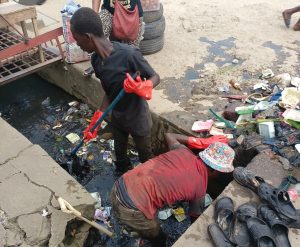
The path forward requires urgent interventions. In many Nigerian cities, waste management systems remain underfunded, recycling infrastructure is minimal, and awareness campaigns are sporadic. Experts believe that collaborative action between citizens, local authorities, and the private sector is the viable path toward sustainability.
UNEP is encouraging global citizens to adopt the 5Rs: Refuse, Reduce, Reuse, Recycle, and Rethink their relationship with plastic.
The Lagos State Government, meanwhile, is urged to scale up enforcement of anti-littering laws, continue their efforts in drainage maintenance, and support recycling industries to reduce dependence on single-use plastics.
Until then, millions of Nigerians will continue to pay the price for every discarded bottle, bag, and broken plastic fork.